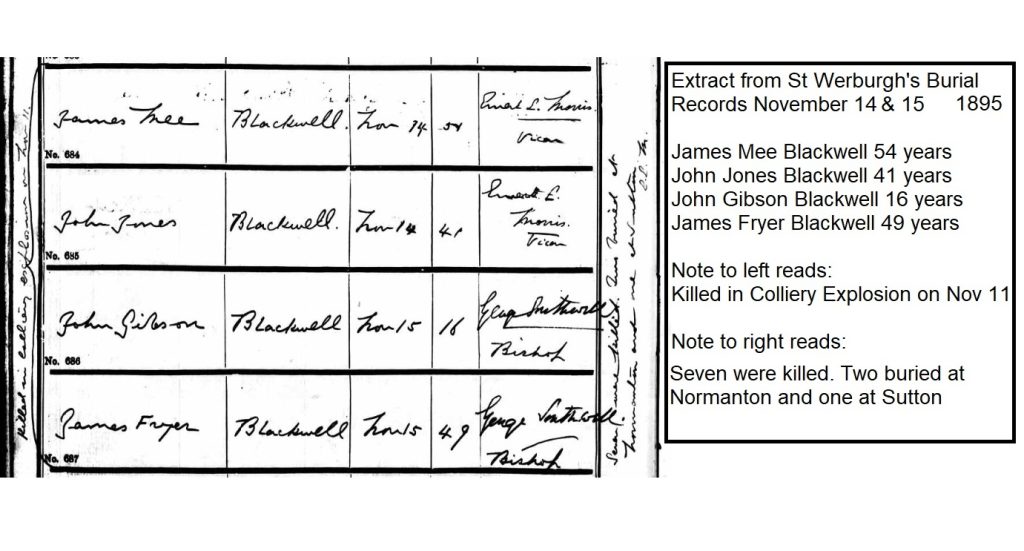
The story of the worst disaster in the history of the mine is told here and of the seven men who were killed that morning.
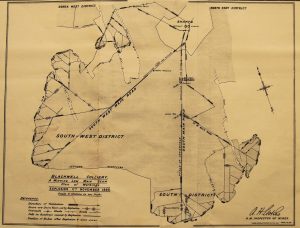 At midnight on the 10th November, 23 night shift workmen descended the mine to prepare the workings for the day shift men on Monday morning. All appears to have gone well until 4 a.m. on Monday when some of the officials felt a concussion which indicated to them that something unusual had happened in some part of the workings. It was soon discovered that there had been an explosion in either the South or the South West workings.
The manager and undermanager, who lived close to the colliery, were called at once and descended the mine at once and tried to get to the men known to be in the South District. The main haulage road was completely blocked by a large fall and the party had to enter the district by the dangerous return airway. This was charged with noxious gases and it was a difficult passage.
Mr. Arthur Stokes, H.M. Inspector of Mines was informed of the accident by telegram and arrived at the colliery at 10 a.m. He went down at once with the manager of a neighbouring colliery, Mr. S. Watson. In the return airway they came to the conclusion that there had been an explosion and upon entering No.20 main road leading to the main haulage road they found that the doors had been blown out and as the exploration proceeded, they met heavy falls and broken tubs. This party of explorers met another party who had been down the mine, at the junction of No.20 main road with the main haulage road, they were found to be in an exhausted state. They had found one of the officials dead but were able to bring the body out.
The second party went on and found five bodies in the haulage road. The Inspector was told that at a point of 418 yards from the bottom of the downcast pit bottom the tail rope of the haulage gear was rubbing against the side of the roadway and men had been set to remove the projection. Near this point, where the bodies of Jones, Shaw and Gibson and a dead pony attached to two loaded tubs. Nearby was an empty water barrel, turned up on end, a bucket in a refuge hole and the men’s blasting tools, and a powder can in another refuge hole. A few yards further on, there was a piece of timber laid across the rails which was the recognised signal that a shot was to be fired. It was evident that the shot had blown out from the side of the road.
The men who lost their lives were-
(Click on name to read their story)
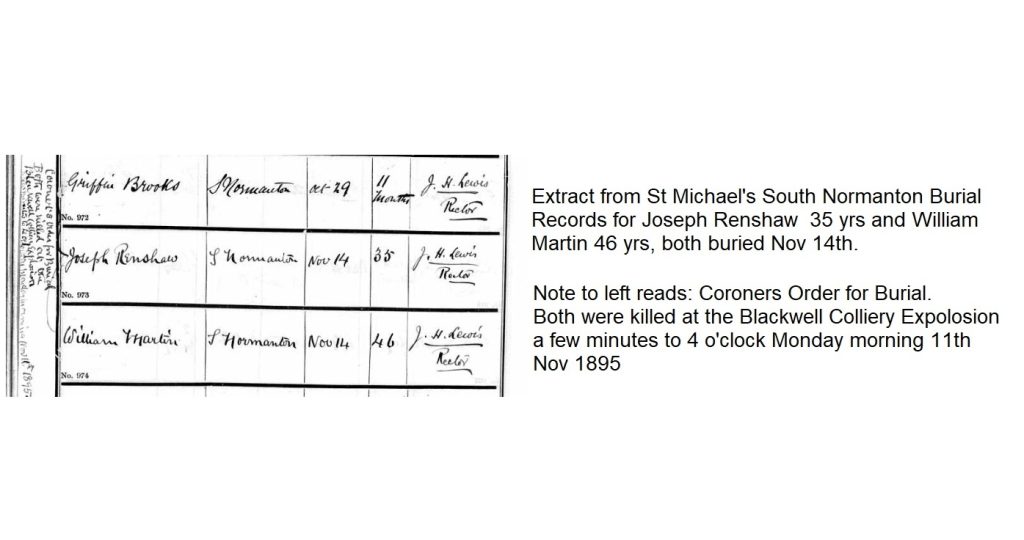
William Martin, night deputy
Joseph Renshaw, examiner
James Fryer, examiner
James Mee, dataller
John Jones, dataller
Thomas Shaw, dataller
John Gibson, driver.
Read about the Inquiry into the Deaths
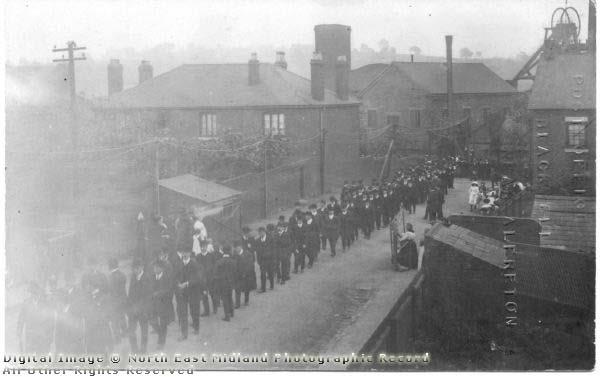
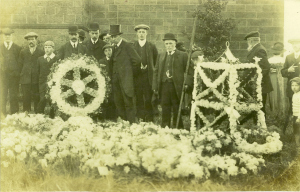
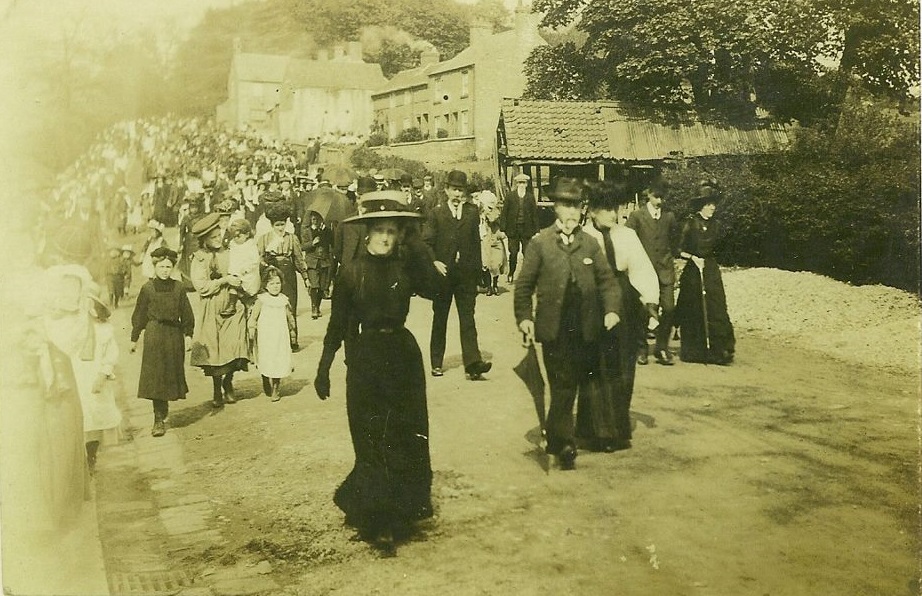
The Photographs here from that time show the preparation for the procession to the church , tributes at the church and the return of mourners down Church Hill