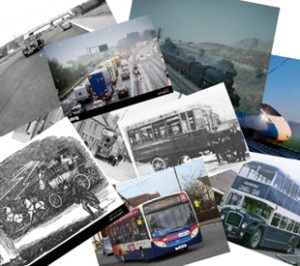
Transport In & Around Blackwell Parish
( Thanks to Geoff Cottam of Newton for this extensive presentation ..May 2026)
The Stagecoach Days…
Local roads, up until the 18th century, were nothing more than basic lanes and tracks, and the only way of getting around for most people, would be on foot. Some more fortunate residents would travel on horse-back, or by horse and cart, but, for the rank and file, it would be Shank’s Pony.
The main roads between the larger towns and cities, were some improvement on the local lanes and farm tracks, but were by no means a safe and comfortable way to travel.
In those times, it was unusual for people to travel far from their place of birth, and the major users of these main roads, were persons involved in postal delivery. A postal delivery service began in England in 1635, and involved mounted carriers, who transported the post between local postmasters, who would then deliver the mail to the intended recipient. This system, which existed in the same form for 150 years, was far from efficient, and post riders were easy targets for robbers.
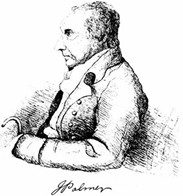 In 1784, theatre owner John Palmer, who was involved in transporting actors and stage material around the country, believed he could do better, and the Chancellor of the Exchequer, William Pit, decided to let Palmer try.
Palmer was successful, and beat the delivery time from Bristol to London, by 22 hours, completing the journey in 16 hours.
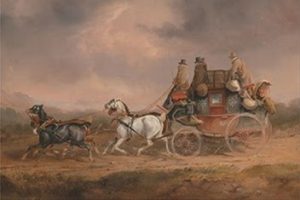
A year later, in 1785 Mail Coaches, sometimes called Post Coaches, were in business delivering mail around the country, to major towns and cities .To Improve journey times even further, the creation of turnpike roads in the late 1780’s, allowed faster travel, and opened the way to enterprise, amongst proprietors of stage coaches.
The first mail coaches on these turnpike roads, along with the horses and drivers, were supplied by contractors. However, by the 1800’s, the Post Office owned their own fleets of coaches, in black and scarlet livery.
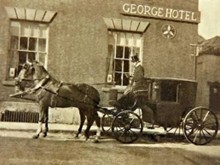 Originally, Rykneld Street of the Roman era, the main Derby to Chesterfield road, passed through Oakerthorpe, Higham and Shirland, and by-passed Alfreton altogether. The main coaching inn, for both passengers and mail, was the Peacock at Oakerthorpe.
However, by 1829, the increased importance of Alfreton, due in part to the emergence of the mining industry, led to the need for better communication with other parts of the country, and Alfreton would become the main stopping point for mail and passenger coaches passing through the town, on their way to Chesterfield and Sheffield to the North, Derby, Nottingham and Birmingham, to the South, and Newhaven to the West.
The coaching inns were The Angel Inn, and The George Hotel.
The Turnpike system was in place from 1663, but was phased out in the late 1800’s, as they were seen as an obstacle to free trade, by the emerging industrialists, with the major roads now transitioning to maintenance by the new county councils.
Canals & Rail
The building of the Cromford canal in the late 1790’s, with its Pinxton branch running through Pye bridge, created a new transport medium, to move heavy, or fragile loads, to distant markets, more quickly.
The Pinxton Arm of the Cromford Canal was opened in 1794, following it’s development supported by local collieries. In the valley beyond Redbarn Farm in Newton was Deadwater Pit, among others on the Huthwaite side, and these were serviced by a tramway to carry coal wagons winched by engine to Berrister Farm ( near McDonald’s); from there the wagons rolled by gravity to Pinxton Canal Wharf . The tramway can be seen on an 1877 map.
However, there would soon be serious competition to the canal network, as the introduction of new deep collieries in the area attracted railway companies, to extend their network, to cover this area.
The development of the rail network took business away from the canals, but it also impacted on the stage and mail coach operation.
As early as Nov 11 1830, mail first arrived by train on the Liverpool and Manchester Railway. This marked the beginning of postal movements by rail in Great Britain, and by 1838, Travelling Post Offices were in operation across the British rail network.
This effectively brought to an end the era of the mail coach.
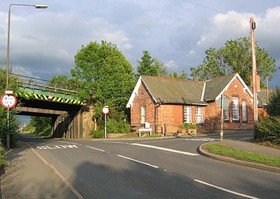 The first Railway Station to be built in the area, was Doe Hill Station, on the Midland Railway (Erewash Valley Line).It lay in the parish of Tibshelf, just on the Tibshelf/Morton border. It was opened in 1862, and closed in 1960, and is now a private residence.
The next station to be opened was Tibshelf and Newton Station, on the Midland Railway Branch Line to Pleasley.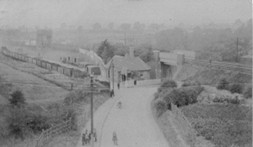
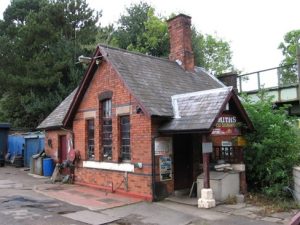 It opened in 1863, but closed to passenger traffic in 1930, although the line remained open for coal traffic, until the closure of Silverhill colliery, in 1992.
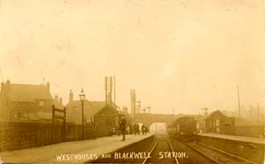 Westhouses and Blackwell station opened in 1881, as a junction for the Midland Railway branch line to Pleasley, and the main Midland Railway line (the modern day Erewash Valley line).
The station closed to passenger services in 1930.
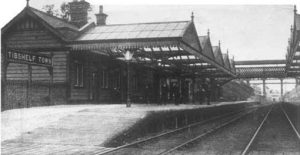 Tibshelf Town Station, was opened in 1893, by the Manchester, Sheffield and Lincolnshire railway, later part of the Great Central Railway, and subsequently, LNER.
The station closed in 1963, the line itself closing in 1966
Trams, Traps & Taxis
Despite the dramatic influence the railways had on the area, mail, parcels and goods still had to be moved from the railway stations, into the local towns and villages, and this relied heavily on the horse and carriage.
Businesses were stablished throughout the area, as parcels carriers, carters and taxi cab companies, many operated by local farmers, who had the horses and carts to operate these services.
These businesses flourished, alongside the growth in the population, up to the early 1900’s, when the introduction of the internal combustion engine, brought about a steady decline.
However, many farmers still carried on in the business, and became the providers of local motor bus services in later years.
The early 1900’s brought about another means of public transport, with the introduction of electricity, in the form of the tram.
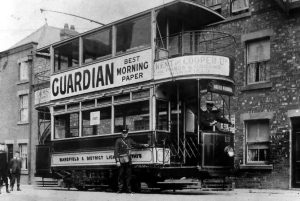 The nearest tram network to the parish, was The Mansfield and District Light Railway Company, (later to become Mansfield District Traction). This was formed in 1901, by Balfour Beatty, and started operations in 1903.
The network centered on Mansfield, with track radiating out to Pleasley, Mansfield Woodhouse, Berry Hill, Crown farm, and Huthwaite, which was the nearest terminus to Blackwell parish.
This Tram operation ceased in 1932, to be replaced by the motor bus.
Notts and Derby Tramways Company, formed in 1903, was another Balfour Beatty concern, and they constructed a tramway from Ripley to Nottingham. This tramway, at a length of 15 miles, was, at the time, the longest tramway in England, with only Glasgow claiming a longer one.
The tramway, which commenced operations in 1913, and was known locally as “The Ripley Rattlers”, became so renowned, that it became the focus of a short story called “Tickets Please”, written by D.H.Lawrence, a prolific writer of poetry, short stories, novels and plays, who was born in Eastwood, and lived near the tramway.
The trams ceased operations in 1933, to be replaced by a trolley bus system, which operated over the same route, until, replacement by motorbuses in 1953.
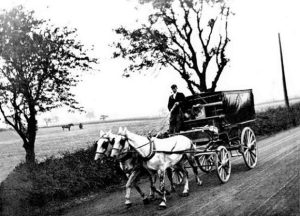 However, as stated previously, no trams actually ran in the parish, so if you wanted to catch a tram, you would have to either walk, or take a cab or taxi to the tram terminus. The taxi services were operated by local businessmen or farmers, using vehicles similar to the one shown here.
After WW2 Jack Collins and Bill Major operated two american limousines as Taxis in the parish.
The Bus…
The early 20th century, saw the introduction of the motorbus, which gradually replaced the horse drawn vehicles.
For a short period, Trent operated a limited service in the area, but the main providers of public transport, remained the small operators, who had up-graded from the horse and carriage, to the motorbus.
Following Trent’s withdrawal from the area, United Automobile Services, a large bus operator from Lowstoft, established a garage at Tibshelf, which was run by one of their bright young managers, named W.T.Underwood. The company was named Underwoods, and operated vehicles supplied by United Automobile Services. The company provided services from Alfreton to Chesterfield, and Clay Cross to Mansfield.
Underwoods was formed around 1920, but the Tibshelf garage was closed around 1927, and W.T.underwood moved his operation to Clowne, at the same time, changing the company name to East midlands Motor services Ltd.
It has been claimed that Underwoods operated buses to transport strike-breaking miners, during the General Strike of 1926, and the company and its employees, were more than likely subjected to acts of vandalism and violence, during this time, and this and subsequent boycotts, may have led to the change of name.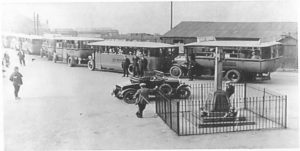
The closure of Underwood’s operations in Tibshelf, left local passenger services, in the hands of a number of small independent companies, but there was little or no structure, or connectivity, in the services provided.
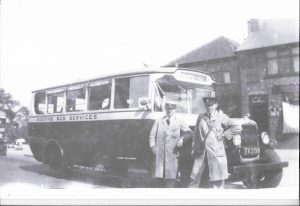 One of the local operators was J.H.Booth of Westhouses, who operated a Alfreton to Chesterfield, via Tibshelf service, a Westhouses to Glapwell colliery service, an Alfreton to Blackpool Express service, and excursion licences, from Westhouses and Alfreton.
Public transport in and around the parish, was largely provided by these independent operators, up to 1933, when a new operator, Midland General, came onto the scene.
Midland General was formed in 1920, by Balfour Beatty, who already owned Notts and Derby Tramways, and Mansfield District Tramways. MGO’s area of operation, up to 1933, had been largely limited to support of the tram networks, but by 1933, the company was aggressively involved in the take-over, of many of the smaller independents in this area.
Their objective, was to gain a strong foothold in this area, and to provide regular services, with good connectivity to the main towns in the surrounding area.
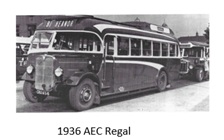 Between 1933 and 1936, Midland General expanded their fleet, largely due in part, by their acquisitions of vehicles and licences, from smaller independent operators, and this left them with a very diverse fleet of vehicles, which must have been a nightmare for the maintenance department.
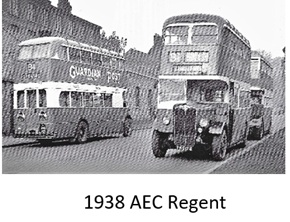 However, in 1936, a very ambitious bus replacement programme was submitted to the board, and with it, a change in purchasing policy, and the AEC/Weymann combination, would become the face of MGO, through to the mid 1950’s.
The new route designations, were adopted by MGO in 1936. The Thompson brothers service 23, was originally leased to Mansfield District Tramways, with MGO retaining the option to resume possession, which they did in 1933.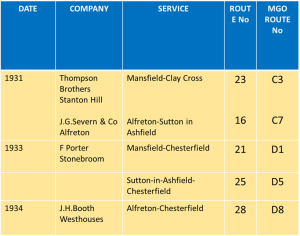
This route numbering system remained in place for over 40 years, until it was replaced in 1978, following the creation of the National Bus Company (NBC) in 1969, which led to the merger with Trent in 1972.
Their very smart Blue and Cream livery, became a common site on our roads, and they were very reliable-you could almost set your watch by them.
Pit and factory services, school runs, regular services to Alfreton, Chesterfield, Mansfield Sutton-in Ashfield, Skegby, Mystery Tours and Excursions, as well as Private Hire, – everything provided by MGO.
By 1948, midland General were under the control of the British Transport Commission (BTC), having been nationalised when Clement Attlee’s Labour Government, had introduced a programme of nationalisation of some of the country’s major private industries, including the electrical supply and distribution companies. With the introduction of the Electricity Act in 1948, The Midland Counties Electricity Company,
owned by Balfour Beatty, and with whom they had deposited the shares of MGO, was dissolved, and replaced by the British Electricity Authority, thereby nationalising MGO.
The bus replacement programme was now under the control of the BTC, and they decided that MGO did not require any new vehicles, until 1954. Furthermore, the BTC instructed that all new vehicles, purchased by companies within the Nationalised BTC
Group were to be on Bristol chassis, and use Eastern Coachworks bodies.
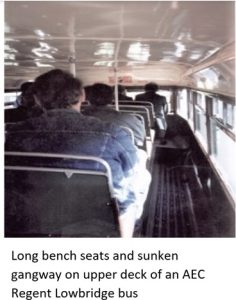
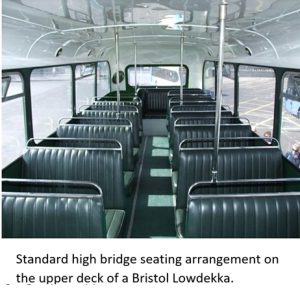 This meant an end to Midland general’s long association with AEC and Weymann, but brought about a change in the appearance of MGO vehicles, with the introduction of the ubiquitous Bristol Lodekka, which gave passengers a low bridge bus, but with a standard seating arrangement on the upper deck. Prior to the introduction of the Lodekka, upper deck seats were bench seats 4 deep, with a sunken gangway down the offside of the bus
The Lowdekka utilised a revolutionary divided transmission, which permitted the use of a normal highbridge body, layout, on a low floor chassis and also introduced the luxury of platform doors, instead of the drafty open platforms of its predecessors.
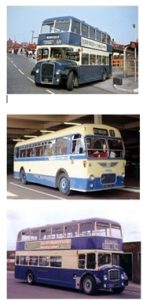 The New Face of Midland General from the mid 1950s.
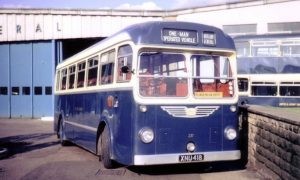 The introduction of Bristol/ECW buses promoted the move to One Man operation, as can be seen by the notice in the windscreen of the Bristol LS in the photo here, and this sounded the death knell of conductors on our buses, although the use of one man operation on double deckers, was not permitted until 1966.
However, Bristol were slow to react to the change in regulations regarding one-man operation of double deckers, and they did not produce a suitable vehicle to accommodate this, until the Bristol VR was introduced in 1968, but the first production vehicles experienced many problems with transmission and engine overheating.
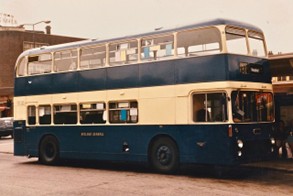 It was not until the series 3 VR came out in 1974, that this model became reliable.
Midland General took delivery of their first rear engine double deckers in 1969, in the form of 6 Bristol VRTSL6G models, with 2 more following in 1970.
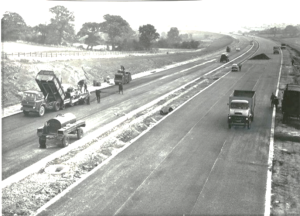 One of the most significant impacts on transport for our area, came about by the extension of the M1 motorway, through Derbyshire.
The first sections of the M1, Junctions 5-18, were opened in 1959, with a further stretch, Junctions 18-23, opening in 1965.
It was this year that work started on the stretch of the M1 through our area, and by 1967, the M1 stretched up to Junction 34, making a massive change to journey times north and south.
Midland General however, were quick to take advantage of the M1 motorway, before it reached Derbyshire.
In 1964, MGO received the first of the newly introduced Bristol RELH6G coaches, which at 36 ft long, were the maximum permitted length for a coach.
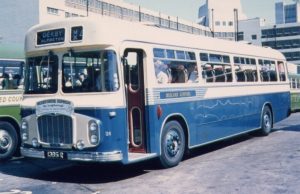 Although also used for stage carriage work, these coaches came into their own in 1965, floating passengers in extreme comfort down to London, on the MX4 Alfreton-Derby-London service, run jointly with Trent and Yelloway.
This particular coach was marketed as “The Derbyshire Express,” offering a daily service from Alfreton, via the M1 Motorway from Northampton, to London Victoria coach Station.
 The next significant event, affecting public transport in this area, was the formation of the National Bus Company in 1969
In the early years following nationalisation, buses were still operated by locally managed subsidiary companies, who maintained their own fleet names and liveries.
However, by 1972, there were signs of rationalisation within the NBC, leading to the amalgamation of operators, into larger units, and Midland General fell victim to such a move on Jan 1st 1972, when it was merged with the Trent.
For a short period, there was little evidence of this change, but the NBC then decided that all their companies, should have either NBC Green, or NBC Red livery.
With MGO now being merged with Trent, it was decided that all buses would be painted in the NBC Red livery.
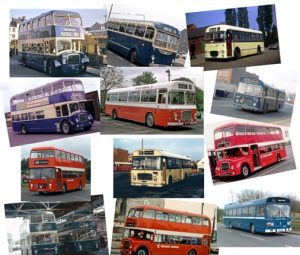 This process was gradual, with MGO buses being re-painted, when they came in for service, but the Midland General fleetname, was maintained.
This led to a period from 1972-1976, when MGO buses, could turn up in a variety of liveries, as shown here.
On October 1st 1976, all MGO licences were transferred to Trent, and from that date, all re-paints included a change of fleet name from Midland General, to Trent, and by the end of 1977, the Midland General name had been obliterated from the fleet.
The operational side of Midland General was also feeling the effects of Trent integration, as the distinctive route numbering that was familiar to all, having been in place since 1936, began to disappear, as routes were revised, re-timed, or cancelled.
On April 23rd 1978, the D1 became the revised Route 341, the D8 became the revised Route 246, and the C7 became the revised route 632.
1986 brought about further changes to public transport. The Conservative government of the day, were very keen on de-regulation of bus services, and re-privatisation of the industry, as covered by the Transport Act of 1985.
Before 1986, Local Authorities regulated or owned bus services, agreeing routes, time-tables, and setting fares.
The Transport Act of 1985 changed all that. Bus services outside of London, were de-regulated, handing control to the private sector, which promised to deliver lower fares, new services, and more passengers.
In reality, what happened was just the opposite: soaring fares, the reduction or axing of services, and plummeting patronage.
This brought about a string of management buyouts of NBC companies, including Trent, Midland General and Notts and Derby, who were all bought by Wellglade.
Whilst Trent survived as Trent/Barton, and Notts and Derby still exists, Midland General does no longer operate, as a bus company, although I understand Wellglade still own the Midland General name.
One result of the de-regulation of bus services, was the opportunity for independent operators, to take on services which they considered might be profitable, and this resulted in operators who had previously been limited to private hire work, now offering a regular service to an agreed timetable.
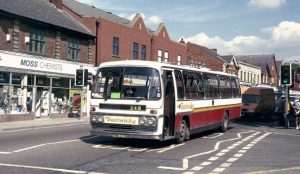
 One such local operator was Bestwicks of Tibshelf, whose ex-Barton, Plaxton bodied Leyland Leopard GNN 22N, can be seen in Alfreton, working a local route in August 1996.
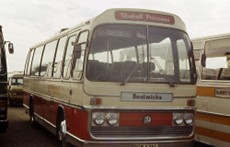
And another Bestwicks coach, this time a Plaxton Bodied Bedford, carrying the name “Tibshelf Princess”, parked up at an unknown location, presumeably on private hire duties.
Do we miss the days of reliable public transport??
General public opinion would support the claim, that we have not had a proper bus service in the area, since Midland General disappeared off the scene, certainly, not one that could be relied on.
Limited services have been provided at some point during this time by Trent, Stagecoach East Midland, Chesterfield Community Transport, and Hulleys, but we are left with the situation that anyone wishing to catch a bus to Chesterfield, would first have to get to either Alfreton or Tibshelf, where Notts and Derby now provide a service to Chesterfield.
It would appear, that we are in a very similar situation to our ancestors in the early 1800’s who would have to get themselves to Ambergate or Alfreton, to catch the stage or mail coach, or a century later, our relatives wishing to take a tram to town, would first have to get themselves to either Ripley or Huthwaite, but at least, in the latter case, they did have the railways.
Speaking of railways, there might have been a final chapter on public transport in the area, but fortunately, it is one that I do not now have to write.
 I refer of course to HS2, which would have had a significant impact on the community, for little benefit locally.
Indeed, for many residents, who have suffered compulsory purchase of their property, or have chosen to move, because of the perceived impact the project would have on their lives, the damage has already occurred.
In conclusion, we are obviously worse off now, than our parents were, in respect of the quality of service that our public transport network provides.
We have a very poor unreliable bus service, and gone are the days when you walked to your local railway station.
However, it must be said, that we generally only have ourselves to blame. We fully embraced the freedom and independence that car ownership gave us, and turned our backs on public transport, and now, as some of us reach the point where we no longer want, or have the ability to drive ourselves, we wish for the good old days, when we had a reliable bus service.
Maybe, if we had used the services more, while they were there ????
Who Knows!