After the huge success of the Blackwell Brides project at St Werbergs Church in Old Blackwell where over 100 different community artefacts were showcased. We were invited to share it with the wider community.
Derbyshire Makes festival events held in Bolsover and Hardwick Hall seemed the perfect collaboration, enabling the wider residents of Derbyshire North East to be inspired by and learn from a bitesize version of the exhibition.
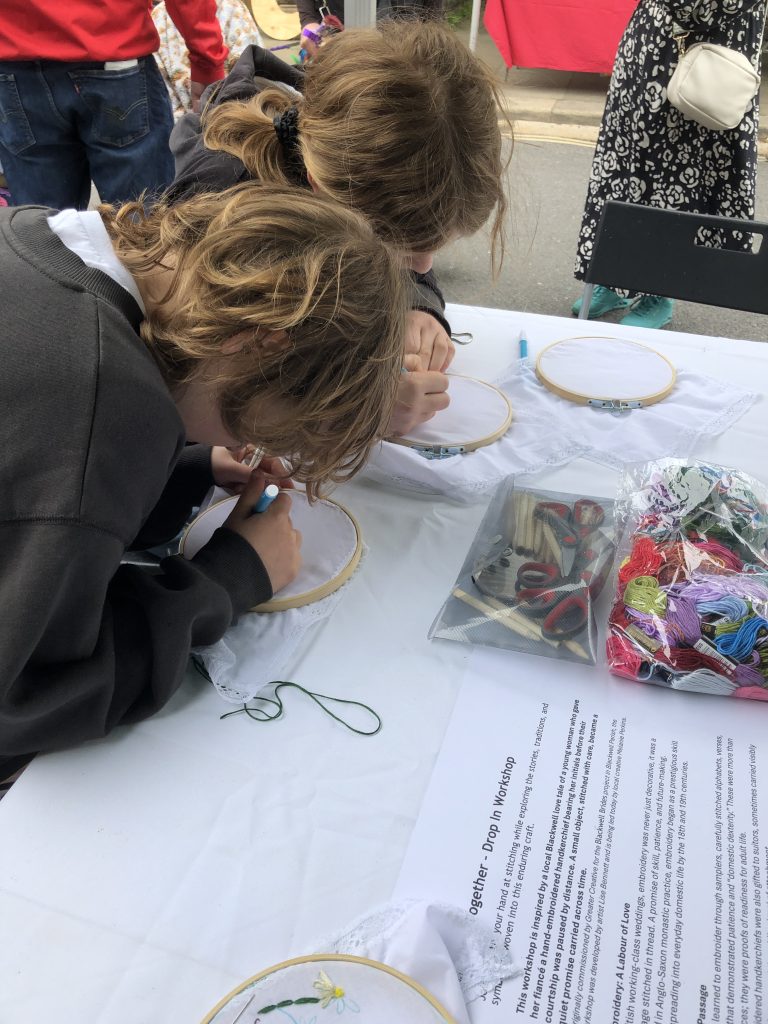
Bolsover – Castle Street – 16th May 2026

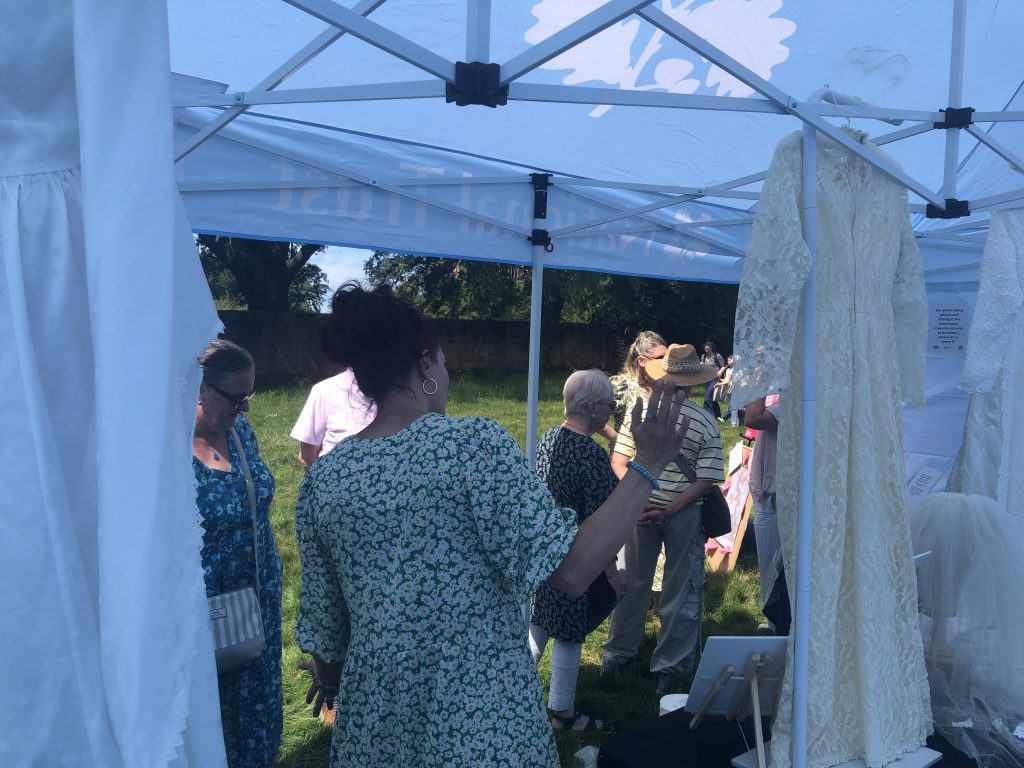
Touring the exhibition required a new level of planning taking community treasures out in to the ‘wild’ meant considering weather conditions as the events were outside, wind rain and bright sun light can be extremely damaging on delicate materials already owned for many years.
Alongside this the smaller venues ‘Gazebos’ meant that the general public would be much closer to the gowns and cakes meaning they are more likely to be touched.
As a result we chose to use smaller dresses to fit in the spaces. we also did not tour the oldest dress we had access to at the first exhibition as its age means its incredibly fragile and the outdoor environment posed too much of a risk.
Reusing the stands, hangers and easels from the initial exhibition reduced costs for touring, though some new interpretation was required to provide more context for visitors to the toured exhibitions.
On collection of a dress for the second time a resident said ‘It’s nice its still getting some use after all these years, I cant believe people want to look at it to be honest’
“A wonderfully creative and original way to capture precious memories and document our past for future generations.”
“Fabulous — what a worthwhile and thought-provoking idea!”

“Shiny salmon story evocative of first wedding I attended as a teenager (where I discovered blue cheese and Tuborg lager dont really mix.)”

“Fascinating – and such a great idea to document our history/stories.”
Hardwick Hall – 31st May 2026

“Lovely to see history of women from our parish (we live in Blackwell ♥).”

Hardwick Hall provided the perfect back drop for a heritage project and active engagement levels from the public were high, a large proportion listened to the oral histories and seemed much more comfortable using the interp to inform them about the exhibition.
We observed early on in the day that visitors liked a small introduction to the stand and then preferred to look alone around the installation, often returning to ask questions when they had read and listened to all aspects of the exhibit.
Many shared there own stories, connecting themselves to the heritage and recognising the importance of their own experiences, one visitor told us about a book he ad written about his own experiences.
During the event a member of the Working party and volunteer on the project stated ‘I am surprised how much people who dont live in the parish are still interested in the heritage of the parish.
We discussed why we thought that could be and decided that possibly human stories with authenticity and relatable content enabled people to connect with the exhibition despite the hyper local focus. It enabled people to compare the similarities and differences of their personal experiences.
Children and Adults alike were observed to be more confident listening to the oral histories and one gentleman told me he was pleased to hear ‘snap’ used to describe food, highlighting to me he enjoyed the real voices using local terms.
“Fabulous event. You are an amazing group of ladies“
“Women’s histories matter, and this is a great showcase for these stories.”

“What a fabulous idea! Great to hear the stories!”

